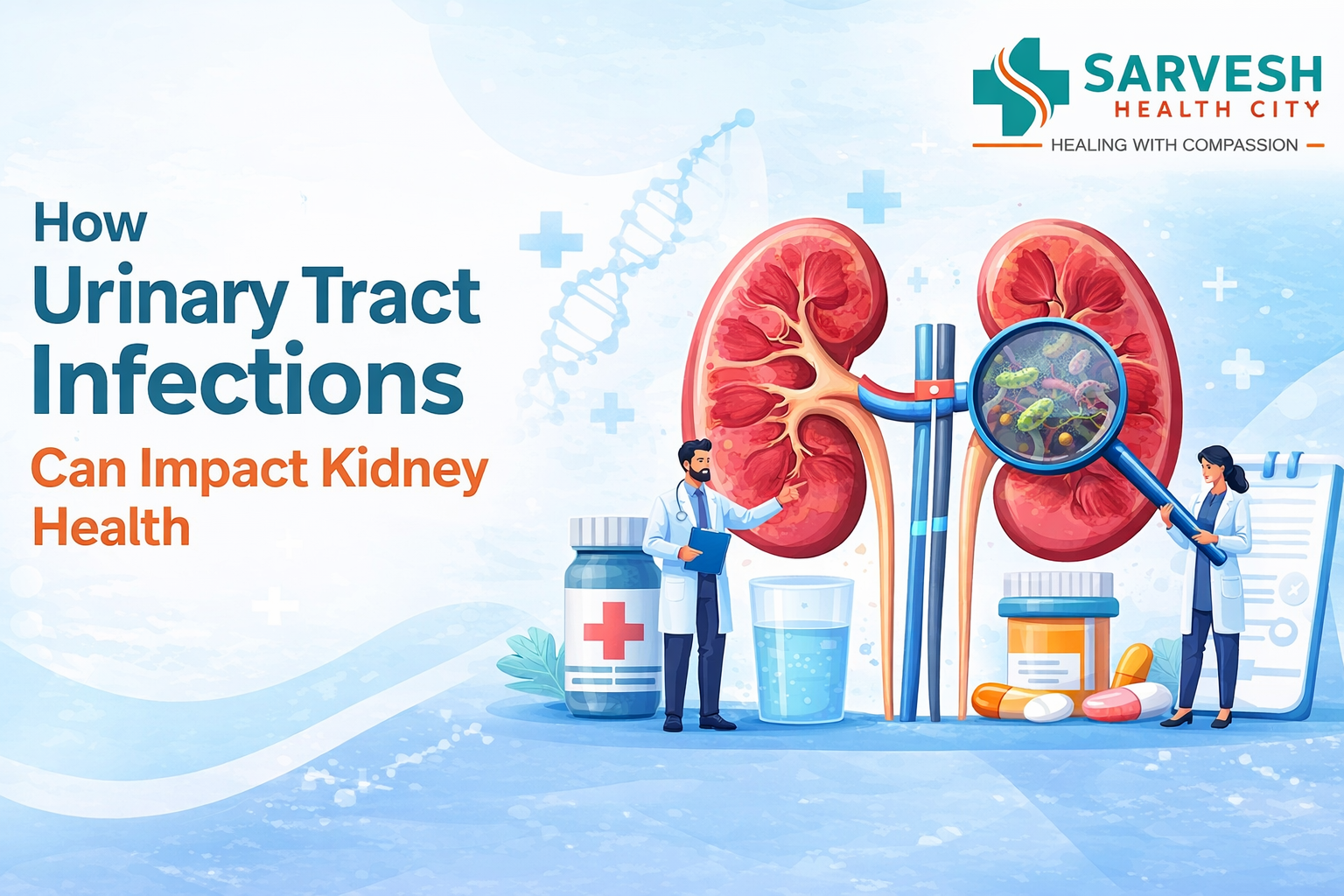
Urinary Tract Infections (UTIs) are very common, especially in women, children, and older people. Many people think of UTIs as small bladder infections, but if they aren't treated or keep coming back, they can hurt your kidneys. When bacteria move from the bladder to the kidneys, the situation gets worse and could cause damage that lasts a long time.
At Sarvesh Health City, which is known as the Best Nephrology Hospital in Hisar, specialists often treat patients whose kidney problems started with UTIs that were ignored or not treated correctly. To stop UTIs and get them treated early, you need to know how they affect kidney health.
What is an infection in the urinary tract?
When bacteria get into the urinary system, it causes a UTI. The infection can hurt:
-Urethra (Urethritis)
-Cystitis in the bladder
-Kidneys (Pyelonephritis)
The urethra or bladder is where most UTIs start. If you treat them early, they usually go away on their own. But if you don't treat it, bacteria can move up to the kidneys, where they can cause even worse problems.
How do UTIs get to the kidneys?
The urinary system's job is to get rid of waste and keep the body's fluids in balance. But bacteria, most often E. coli, can get in through the urethra and grow in the bladder. If not treated right away, the infection could spread through the ureters and into the kidneys.
This is a kidney infection (pyelonephritis) that needs to be treated right away.
Risk factors that raise the likelihood of kidney involvement comprise:
-Treatment of UTIs that takes too long
-Infections that happen again and again
-Stones in the kidneys
-Diabetes
-Immune system that isn't strong
-Men with an enlarged prostate
-Being pregnant
Signs of a Kidney Infection
When a UTI spreads to the kidneys, the symptoms get worse. Some of these are:
-Very high fever
-Chills
-Pain in the back or side (flank pain)
-Feeling sick and throwing up
-Tiredness
-A lot of painful urination
-Urine that smells bad or is cloudy
-Blood in pee
Kidney infections are not small problems. If you don't treat them right away, they can cause permanent damage.
How UTIs Can Hurt Your Kidneys
1. A sudden infection in the kidneys
If you don't treat a bladder infection, it can turn into acute pyelonephritis. This condition makes kidney tissues swell up and may make them work less well for a short time.
Most of the time, recovery is complete if the problem is treated early. But waiting to get treatment raises the chances of problems.
2. Damage to the kidneys over time
Repeated infections in the kidneys can leave scars on the tissues. This scarring makes it harder for the kidneys to filter blood over time.
Long-term damage may eventually cause:
-Blood pressure that is too high
-Protein leaking into urine
-Less effective kidneys
-Chronic Kidney Disease (CKD)
3. Sepsis (A Dangerous Condition)
In extreme cases, bacteria from the kidneys can get into the blood. Urosepsis is the name of this condition, and it is a medical emergency. If not treated right away, it can cause organs to stop working.
4. Higher Risk for Kids
Repeated UTIs can permanently damage the growth and function of the kidneys in children, especially those with vesicoureteral reflux (a condition where urine flows backward toward the kidneys).
In pediatric cases, early diagnosis and monitoring are essential.
Who Is More Likely to Have Kidney Problems?
Some people need to be extra careful about UTIs:
-Women (because their urethra is shorter)
-Women who are pregnant
-Older people
-People with diabetes
-People who have kidney stones
-People who have trouble urinating
People who use catheters
Sarvesh Health City is the Best Nephrology Hospital in Hisar, and its specialists offer advanced diagnostics and preventive care for patients who are at high risk.
Finding out if the kidneys are involved
Doctors might say:
-Urinalysis and culture test
-Tests on blood
-Ultrasound
-CT scan (for cases that are hard)
Tests for how well the kidneys work
Testing early helps keep the kidneys from getting damaged over time.
Choices for Treatment
1. Antibiotics
Strong antibiotics are used to treat most kidney infections. In serious cases, hospitalization and intravenous antibiotics may be necessary.
2. Staying hydrated
Drinking enough fluids helps get rid of bacteria in the urinary system.
3. Managing Pain and Fever
Doctors may give you medicine to help with your symptoms.
4. Handling the Root Causes
You need to treat kidney stones, prostate enlargement, or structural problems to stop them from coming back.
The nephrology team at Sarvesh Health City makes sure that patients get all the care they need to keep their kidneys healthy and avoid problems in the future.
What happens to you in the long run if you have UTIs over and over again
If UTIs keep coming back, patients may get:
-Long-Term Kidney Disease
-High blood pressure
-Lowered rate of kidney filtration
-Long-term nephrology monitoring is necessary.
In these cases, it is important to see a kidney specialist on a regular basis.
Tips for Keeping Your Kidneys Healthy
The best way to keep your kidneys safe is to avoid getting UTIs. Here are some useful steps:
-Drink a lot of water
-Don't hold your pee for long periods of time.
-Keep your hygiene up
-After having sex, urinate.
If you have diabetes, keep your blood sugar levels in check.
Don't use catheters that aren't needed.
Finish the full course of antibiotics as directed.
If you see the first signs of a UTI, you should see a doctor right away to avoid serious kidney problems.
When should you see a kidney specialist?
If you have any of the following, get medical help right away:
-Fever that won't go away with UTI symptoms
-Very bad back pain
-UTIs that keep coming back
-Swelling in the face or legs
-Less urine output
Quick evaluation at Sarvesh Health City, the best nephrology hospital in Hisar, can help stop kidney damage that can't be fixed.
Why it's important to get treatment early
A lot of people don't pay attention to mild burning when they pee because they think it will go away on its own. Unfortunately, waiting to get treatment makes it more likely that the infection will spread to the kidneys.
The kidneys are very important for:
-Getting rid of toxins
-Keeping blood pressure stable
-Controlling electrolytes
-Making hormones that are needed
You should never put off taking care of your kidneys.
Questions That Are Often Asked (FAQs)
Q1. Is it possible for a simple UTI to hurt the kidneys?
Ans.Yes. If you don't treat a lower urinary tract infection, it can spread to the kidneys and cause a lot of damage.
Q2. How long does it take for a UTI to hurt the kidneys?
Ans.It depends. In some cases, an infection can spread in just a few days if it isn't treated correctly.
Q3. Do kidney infections last forever?
Ans. Most kidney infections go away completely if they are found and treated early. Repeated infections can leave scars that last forever.
Q4. Who should go to a nephrologist for UTIs?
Ans.A nephrologist should see people who have UTIs that keep coming back, diabetes, kidney stones, or kidney function tests that are not normal.
|